How to Screen for Hazardous Storage Compliance

Hazel Hernandez


May 20, 2026

6 min read

Hazardous storage compliance is a major part of running a safe warehouse in Australia. When you hire new staff, you must verify they know how to handle dangerous goods. This guide helps you identify candidates who understand safety rules and legal requirements. By using the right screening methods, you protect your team and your business from accidents.
Key Takeaways
- Test candidates on their knowledge of the Australian Dangerous Goods (ADG) Code.
- Verify that staff can read and interpret Safety Data Sheets (SDS) quickly.
- Use practical scenarios to check if workers know how to separate incompatible chemicals.
- Confirm that new hires understand the steps for emergency spill containment.
- Use RefHub to find workers who value safety and follow workplace rules.
Introduction to Hazardous Storage Compliance
In Australia, the law requires businesses to manage risks from dangerous chemicals. You need workers who take these rules seriously. Hazardous storage compliance means more than just putting boxes on shelves. It involves knowing which chemicals can sit together and which must stay apart.
When you start your warehouse recruitment process, you should look for specific safety skills. A candidate might have years of experience, but they still need to know the current Australian standards. You are looking for people who follow procedures without taking shortcuts. This protects the warehouse from fires, leaks, or toxic fumes.
Screening for Chemical Segregation Knowledge
Chemical segregation is the practice of keeping different types of dangerous goods away from each other. If certain chemicals mix, they can cause explosions or fires. During an interview, you should ask candidates about these rules.
You can use the following questions to test their knowledge:
- Which classes of dangerous goods must never be stored in the same rack?
- How do you determine the required separation distance between flammable liquids and oxidising agents?
- What does the "Segregation Wheel" or "Segregation Chart" tell you about mixing Class 3 and Class 8 goods?
A good candidate will mention the ADG Code. They should know that some chemicals need a buffer zone or a physical barrier. If they cannot explain why acids and bases stay apart, they may not be ready for a high-risk environment.
Testing Knowledge of Dangerous Goods Storage
Dangerous goods storage involves specific racking and ventilation requirements. Your candidates need to understand how the physical environment affects chemical safety. You should check if they know about:
- Bunding requirements to catch leaks or spills.
- Weight limits for shelving that holds heavy chemical drums.
- The importance of keeping ignition sources away from flammable gas stores.
You can ask them to describe a well-organized dangerous goods area. Listen for mentions of clear signage and tidy aisles. A worker who understands safety screening will look for these details every day. They should know that a cluttered area makes it harder to manage risks.
Evaluating Labeling and SDS Literacy
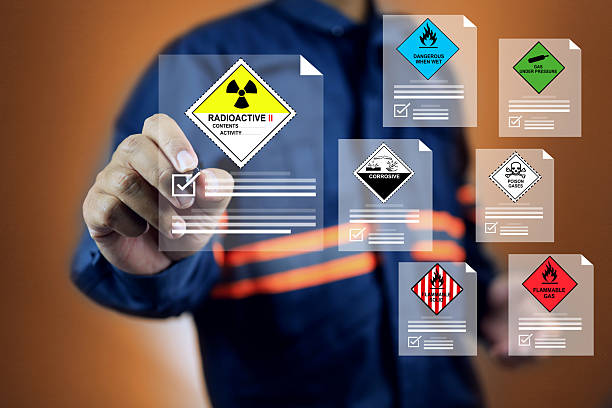
Every chemical container in your warehouse must have a clear label. These labels follow the Globally Harmonized System (GHS). You need to know if your candidates can read these labels correctly.
Ask candidates to identify common GHS pictograms, such as:
- The flame icon (flammable materials).
- The skull and crossbones (acute toxicity).
- The corrosion icon (skin or eye damage).
- The exploding bomb (unstable explosives).
Besides labels, every worker must know how to use a Safety Data Sheet (SDS). You should provide a sample SDS during the interview. Ask the candidate to find the following information:
- The proper PPE (Personal Protective Equipment) for handling the substance.
- First aid measures if the chemical touches the skin.
- The flash point of the liquid.
If they can find this information in under a minute, they have the right literacy skills. This skill is a fundamental part of hazardous storage compliance.
Assessing Emergency Spill Response Skills
Even with the best storage, spills can happen. Your staff must know how to react immediately. You should present a scenario where a five-litre container of a corrosive liquid breaks. Ask the candidate to walk you through their response.
A correct response should include these steps:
- Alerting other workers in the area to stay away.
- Putting on the correct PPE before approaching the spill.
- Using a spill kit to contain the liquid so it does not enter drains.
- Neutralizing or absorbing the chemical with the right materials.
- Reporting the incident to the supervisor.
If a candidate suggests cleaning it up with a regular mop or ignoring it, they are a safety risk. You need people who follow the "Assess, Contain, Clean, Report" method.
Using Warehouse Compliance Tests in Recruitment
Manual interviews are helpful, but they do not show everything. You can use digital tools to get a better view of a candidate's skills. Many managers now use warehouse compliance tests to screen applicants before the first meeting.
These tests provide several benefits:
- They offer a fair way to compare different candidates.
- They cover many topics, from manual handling to chemical safety.
- They save time by filtering out people who do not have basic safety knowledge.
- They provide a record of the candidate's understanding of Australian workplace laws.
By using these tests, you make your recruitment process more objective. You can focus your time on the candidates who already show they respect hazardous storage compliance.
Safety Screening for Australian Regulations
In Australia, WorkSafe or Safe Work Australia sets the guidelines for chemical safety. Your screening process must align with these regulations. You should verify that candidates are familiar with the Work Health and Safety (WHS) Act.
When you conduct safety screening, look for:
- Valid licenses for operating forklifts or other machinery.
- Previous training certificates in dangerous goods handling.
- A history of following safety protocols in past jobs.
RefHub helps you find workers who meet these high standards. When you hire through a platform that understands the Australian market, you get better results. You want a team that helps you maintain a clean safety record.
Frequently Asked Questions
What is the most important part of hazardous storage compliance?
The most important part is following the Australian Dangerous Goods Code. This includes correct segregation, clear labeling, and having the right safety equipment ready. It also requires trained staff who follow these rules every day.
How do I check if a candidate understands chemical segregation?
You can give them a list of chemical classes and ask which ones can be stored together. You can also show them a picture of a storage rack and ask them to spot any errors based on ADG Code rules.
Why is an SDS important for warehouse workers?
An SDS provides all the safety information for a specific chemical. It tells the worker how to handle the substance, what gear to wear, and what to do in an emergency. Workers must be able to read an SDS to stay safe.
Should I test experienced warehouse workers on safety?
Yes. Safety rules and Australian standards change over time. Even an experienced worker needs to show they know the current requirements for hazardous storage compliance. Testing helps you find any gaps in their knowledge.
What should be in a warehouse spill kit?
A standard spill kit in Australia usually contains absorbent pads, pillows, or loose material. It also includes disposal bags, ties, and basic PPE like gloves and goggles. The kit must be right for the types of chemicals you store.
How can RefHub help with warehouse recruitment?
RefHub assists you in finding candidates who are ready for the demands of the logistics industry. By focusing on quality and compliance, the platform helps you build a team that prioritizes safety and follows Australian regulations.
Related Articles


English (United States)