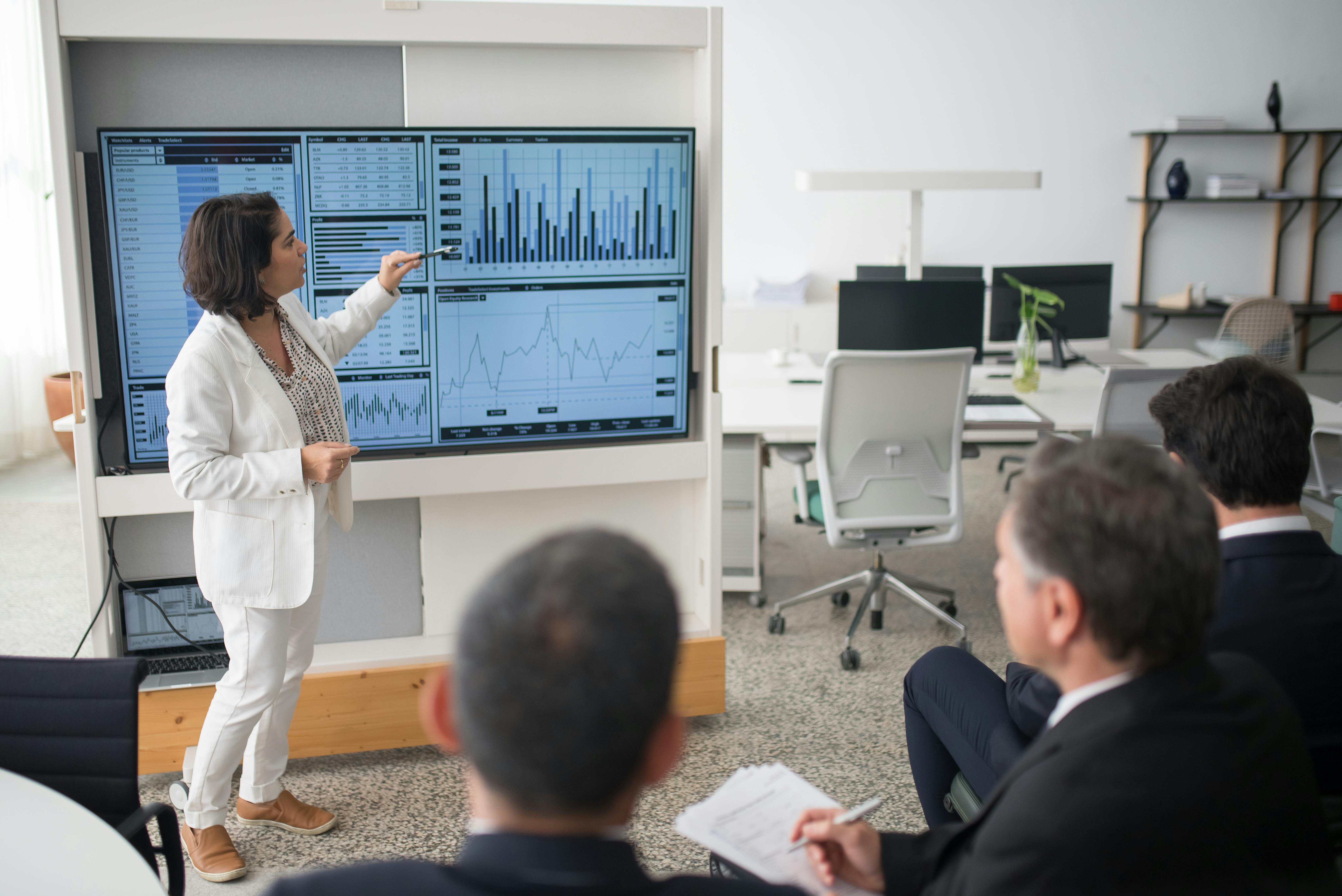
Knowledge worker

Key Takeaways
- A knowledge worker uses theoretical knowledge and analytical skills to perform tasks.
- The term was first used by Peter Drucker in the mid-20th century.
- These professionals differ from manual laborers because their main "tool" is their brain.
- They are common in fields like software, finance, law, and healthcare.
- Autonomy and continuous learning are necessary for their success.
Knowledge worker: Definition and Role in Business
A knowledge worker is a professional whose main value comes from their ability to think, analyze, and solve problems. Unlike workers who perform physical labor, these individuals use their education and specialized training to create ideas or process information. You will find them in almost every modern industry where data and mental skill are more important than physical strength.
Quick Definition
A knowledge worker is an employee who thinks for a living. Their primary task involves handling, creating, or using information to solve complex problems and make decisions.
Detailed Explanation
The concept of the knowledge worker began to gain attention in 1959. Peter Drucker, a famous writer on management, noticed a shift in the labor market. He saw that the economy was moving away from factory work. Instead, it was moving toward roles that required high levels of mental activity.
In the past, most jobs involved making physical products. A person might work on an assembly line or in a field. In those roles, the worker followed a set of strict physical steps. However, a knowledge worker does not follow a simple repetitive motion. Instead, they use their mind to handle tasks that change every day.
The work of these professionals often involves the following activities:
- Analyzing large sets of data to find trends.
- Writing code or designing software systems.
- Planning business strategies for future growth.
- Consulting with clients to provide expert advice.
- Developing new products or services through research.
One major part of this role is that the worker owns the "means of production." In a factory, the company owns the machines. For a knowledge worker, the "machine" is their brain and their education. This makes these employees very mobile. They can take their skills from one company to another quite easily.
To be successful, these workers need specific environments. They usually require:
- High levels of autonomy: They need the freedom to decide how to solve a problem.
- Access to information: They must have the right data and tools to do their jobs.
- Continuous learning: Because information changes fast, they must keep their skills fresh.
- Collaboration: They often work in teams to combine different areas of expertise.
Why it Matters
The rise of the knowledge worker has changed how businesses operate. In the modern economy, mental output is often more valuable than physical output. Companies that want to grow must attract and keep people who can think critically.
Here are the reasons why these workers are important to an organization:
- Innovation: They are the ones who come up with new ideas. Without them, a company might stop growing or fail to keep up with competitors.
- Problem Solving: Modern business problems are often messy and complex. These professionals have the training to break down these problems and find solutions.
- Value Creation: They turn raw data into useful insights. For example, an analyst takes a list of sales numbers and turns it into a plan to increase profits.
- Efficiency: By using software and better processes, they help the company work smarter. They find ways to do more with less time.
- Competitive Advantage: A company with smarter, more capable thinkers will usually beat a company that only focuses on manual tasks.
Managing these employees is different from managing manual staff. You cannot simply count the number of hours they sit at a desk. You must look at the quality of their ideas and the results of their decisions. If you treat them like factory workers, they may become unhappy and leave.
Common Usage and Examples
You can see knowledge workers in many different parts of a business. They are not limited to just one department. Any role that requires a degree or specialized certification often falls into this category.
Common examples include:
- Software Developers: They use logic and languages to build computer programs.
- Accountants: They manage financial data and make sure the company follows tax laws.
- Engineers: They use math and science to design buildings, machines, or systems.
- Doctors and Nurses: They use medical knowledge to diagnose and treat patients.
- Marketing Managers: They analyze consumer behavior to create advertising plans.
- Lawyers: They interpret complex rules to protect their clients or the company.
- Architects: They use design skills to plan safe and beautiful structures.
- Data Analysts: They look at numbers to help leaders make better choices.
In your daily life, you might interact with these workers without knowing the term. When you talk to a financial advisor or a research scientist, you are talking to someone who sells their mental skill.
Synonyms and Antonyms
Synonyms
- Intellectual worker
- Information worker
- Professional staff
- White-collar worker (this is a related term, though not exactly the same)
- Subject matter expert
Antonyms
- Manual laborer
- Blue-collar worker
- Physical worker
- Unskilled laborer
- Assembly line worker
Related Concepts
If you are learning about this topic, you might also want to look at these areas:
- Human Capital: The total value of the skills and experience held by a person or group.
- Intellectual Property: Creations of the mind, such as inventions or designs, that have legal protection.
- Lifelong Learning: The practice of constantly gaining new skills throughout a career.
- Remote Work: A common work style for these professionals since their work only requires a computer and an internet connection.
- Soft Skills: Personal traits like communication and leadership that help a person work well with others.
- Gig Economy: A market where people do short-term tasks, often as freelance experts.
Frequently Asked Questions
Who invented the term knowledge worker?
Peter Drucker created the term in 1959. He wrote about it in his book called "The Landmarks of Tomorrow." He predicted that people who work with their minds would become the most important group in the workforce.
Can a person be both a manual worker and a knowledge worker?
Yes. Many modern jobs require both physical and mental skills. For example, a high-tech mechanic uses their hands to fix a car. However, they also use a computer to find problems and must understand complex electrical systems. This blend is becoming more common as technology enters every industry.
What are the biggest challenges for these workers?
One big challenge is "information overload." Because they deal with so much data, it can be hard to focus on what is important. Another challenge is burnout. Since their work is mental, it can be hard to "turn off" their brain at the end of the day. They also face the risk of their skills becoming outdated if they do not keep learning.
Is a manager a knowledge worker?
Most managers are. Their job involves making decisions, solving conflicts, and planning. They do not produce a physical product with their hands. Instead, they produce direction and coordination for the rest of the team.
How does AI affect this type of work?
Artificial Intelligence (AI) can do some of the tasks that these professionals used to do, like sorting data or writing basic reports. However, humans are still needed for high-level thinking, ethics, and emotional intelligence. AI is becoming a tool that helps these workers do their jobs faster.
Do knowledge workers always need a college degree?
While many do have degrees, it is not always a requirement. Some people gain specialized knowledge through trade schools, boot camps, or self-teaching. The key is having a high level of skill in a specific area that requires deep thinking.
Why is autonomy important for them?
You cannot force a person to have a good idea by watching them every second. Mental work requires focus and creativity. These employees perform best when they have the space to work in the way that fits them best. If a manager tries to control every small step, it can hurt the worker's ability to think clearly.