Why Candidate Skill Testing Beats Resumes

Hazel Hernandez


May 4, 2026

6 min read

Candidate skill testing is the most effective way to find the right people for your team. For many years, HR Directors relied on resumes to judge talent. However, a resume only shows what a person says about themselves. It does not show what they can actually do. This gap between words and actions leads to bad hires and high costs. You need a better way to see the truth about a person's abilities before you hire them.
Key Takeaways
- Resumes often contain exaggerated or false information.
- Objective tests provide data that resumes cannot offer.
- Focusing on skills helps remove personal bias from the hiring process.
- Testing candidates early saves your team hours of wasted interview time.
- RefHub helps you gather the right data to make smart hiring choices.
The Problem with Traditional Resumes
The traditional resume is a list of past jobs and schools. It is a marketing document meant to sell a person. Because of this, many resumes are not fully honest. You might find that a person looks great on paper but fails to perform the job tasks.
- Resumes are self-reported and lack proof.
- They focus on where someone went to school rather than what they can do.
- They often lead to bias because of names, locations, or dates.
- Reading hundreds of resumes takes too much time for your staff.
When you rely on these documents, you are guessing. You are hoping that the person has the abilities they claim to have. This is a risky way to build a business.
Why You Should Value Skills Over Resumes
Modern hiring is moving toward a model of skills over resumes. This means you look at the specific tasks a person can complete. It does not matter as much where they learned the skill. What matters is that they can do the work today.
Using this method helps you find "hidden gems." These are people who might not have a famous university on their resume but have high talent. When you look at skills first:
- You expand your talent pool to include more diverse people.
- You reduce the risk of hiring someone who cannot do the job.
- You make decisions based on facts rather than feelings.
- You help your managers trust the new hires more quickly.
The Role of Pre-employment Screening
To move away from resumes, you must use pre-employment screening. This is a step where you check a person's fit before the first interview. It acts as a filter. It allows only the most qualified people to move forward in your process.
Common types of screening include:
- Cognitive ability tests to check problem-solving.
- Software tests to check technical knowledge.
- Personality tests to check cultural fit.
- Job sample tests to see actual work performance.
By using these tools, you create a fair system. Every person gets the same test. Every person is judged by the same rules. This makes your hiring process much more professional and reliable.
Evaluating Candidate Skills for Better Hires
When you are evaluating candidate skills, you need to be specific. You should not just ask if someone knows how to use a tool. You should ask them to show you. This is where candidate skill testing becomes your strongest asset.
You can use RefHub to test candidates' skills before you invite them for an interview. This allows you to see their score in real-time. You can compare different people side-by-side using numbers.
Consider these steps for evaluation:
- Identify the three most important tasks for the job.
- Create a short test that mimics those tasks.
- Set a minimum score that a person must reach.
- Only talk to the people who pass the test.
This structure keeps your team focused on what is necessary for success. It removes the noise of a long, confusing resume.
How Candidate Skill Testing Saves Time
Your time is expensive. The time of your hiring managers is also expensive. Spending hours talking to people who are not a good fit is a waste of resources. Candidate skill testing fixes this problem by moving the "proof" to the start of the process.
- It removes the need for long phone screens.
- It stops you from interviewing people who do not have the basic skills.
- It gives you a clear reason to say "no" to a person.
- It makes the final interview more productive because you already know they can do the work.
When you have data from a test, you can spend the interview talking about culture and long-term goals. You do not have to spend time checking if they know the basics.
Improving Diversity with Objective Data
Bias is a major problem in hiring. Even when people try to be fair, they often prefer people who are like them. Resumes encourage this bias. A person might see a specific hobby or school and feel a connection. This is not a good reason to hire someone.
Objective testing levels the playing field. The test does not know the person's age, gender, or background. It only knows the answers they gave.
- You focus on performance data.
- You ignore details that do not affect job success.
- You build a team with different backgrounds but high abilities.
- You protect your company from claims of unfair hiring.
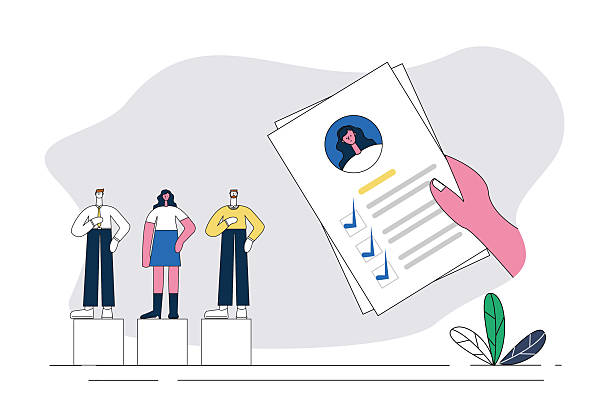
Implementing New Hiring Standards with RefHub
To change your hiring process, you need the right tools. RefHub provides the structure you need to move beyond the resume. You can set up a system that values data and truth.
- Review your current job descriptions.
- Replace "years of experience" with "required skills."
- Add a testing phase to your application process.
- Use the results to rank your applicants.
- Hire with confidence knowing the data supports your choice.
This shift might seem big, but it is necessary. The companies that win in the future will be those that find the best talent, not those that read the best resumes.
Conclusion
The era of the resume is coming to an end. For HR Directors, this is a positive change. By using candidate skill testing, you can make sure your hiring is accurate and fair. You will save time and money. Most importantly, you will hire people who can actually do the job. Focus on skills over resumes and use pre-employment screening to build a stronger team. Start evaluating candidate skills with objective tools today to see the difference in your results.
Frequently Asked Questions
Will candidates be upset if I ask them to take a test?
Most high-quality candidates prefer tests. It gives them a chance to show what they can do. It proves that your company cares about talent rather than just a fancy resume.
How long should a skill test be?
A good test should be long enough to show ability but short enough to be fair. Usually, 20 to 40 minutes is enough for most roles.
Can I use testing for senior roles?
Yes. Senior roles often require more complex tests, such as case studies or leadership scenarios. Testing is useful for every level of your company.
Does testing replace the interview?
No. Testing helps you decide who to interview. The interview is still important for checking personality and communication. Testing just makes sure the people you interview are actually qualified.
Is candidate skill testing legal?
Yes, as long as the test is related to the job. You must make sure the test measures skills that are necessary for the work. This makes your hiring process more legally sound than using gut feelings.
Related Articles


English (Australia)